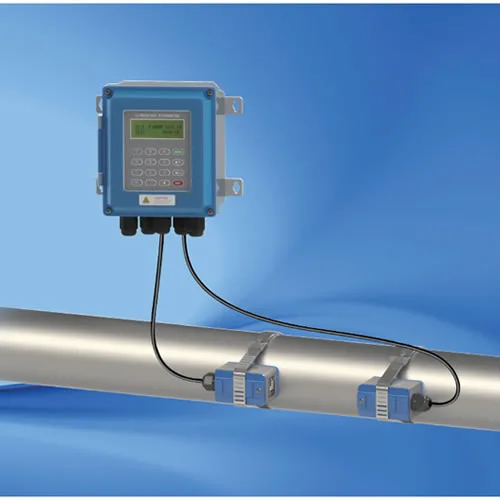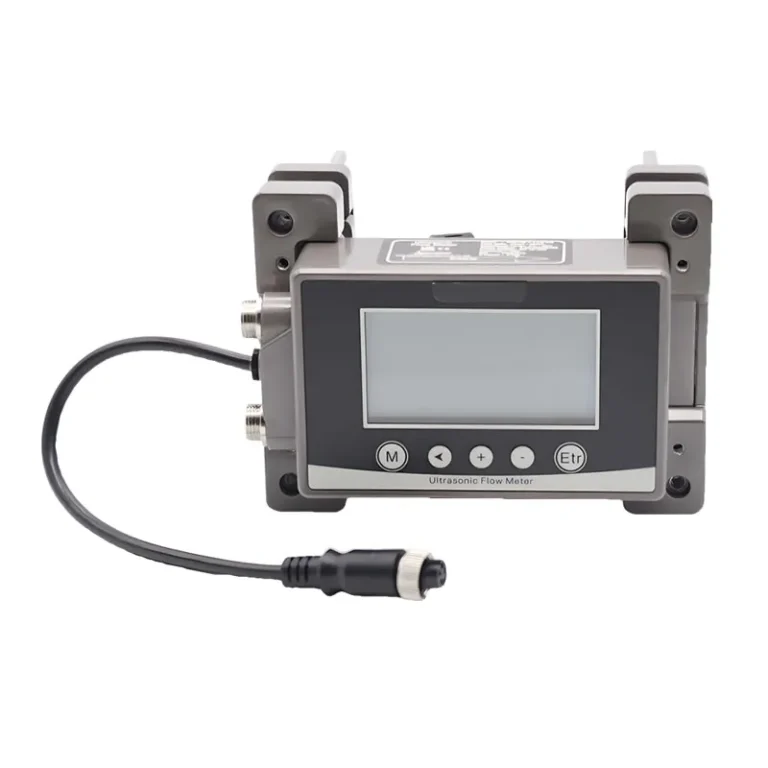
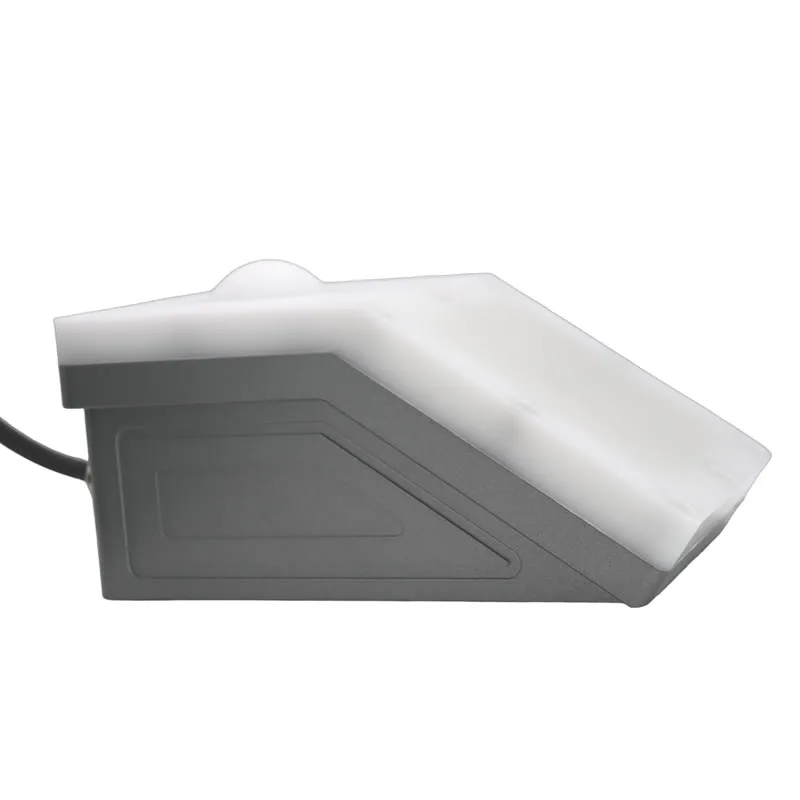
1. Product Overview
KLF110 radar flow meter refers to a product that uses radar to measure water flow velocity and water flow level and converts water flow through an integral model.
It can measure water flow in real time around the clock, and non-contact measurement is not easily affected by the measurement environment. The product provides a bracket fixing method.
2. Feature
- The main advantages of the product are as follows:
- Based on mixed-band radar for non-contact measurement, flow velocity, liquid level, and flow rate are output simultaneously without interference, requiring less maintenance and not affected by sediment, etc.
- IP68 waterproof design, suitable for various field environments and various extreme weather environments.
- Small and compact appearance, super cost-effective.
- Integrated anti-reverse connection, lightning protection, and overvoltage protection.
- Support Modbus-RTU protocol for easy access to the system.
3.Installation
The flow meter consists of two parts: a velocity measurement radar and a level radar. The velocity meter calculates the velocity of the water surface by measuring the Doppler frequency shift of the water flow; the level radar is similar to the velocity measurement radar, which calculates the distance between the radar and the water surface by calculating the flight time of the electromagnetic wave. The flow meter estimates the velocity distribution on the river cross section based on the measured velocity and liquid level, combined with the input of the actual river characteristics to be measured, and calculates the river flow based on the corresponding empirical model.
Therefore, the following points should be noted to accurately measure the flow:
3.1 Selection of water area to be tested
(1) There are no major changes in the direction and velocity of the water flow in the test section, and there are some undulations on the water surface.
(2) There are no large whirlpools, turbulence, or other phenomena, and the river section is straight.
(3) Floating objects: Floating objects will interfere with the radar signal to a certain extent, causing a certain jump in the velocity measurement results. After the floating objects leave the radar field of view, the measurement can return to normal.
(4) Rainfall: Rainwater itself is a moving object and will also be measured by the radar. The radar has a built-in tracking system to avoid jumps in the measurement results. At the same time, for better measurement, it is recommended to lower the installation angle to about 30°.
Note: If the water surface to be measured is calm, the electromagnetic waves emitted by the radar will not be reflected back to the receiver due to mirror reflection, which will cause the radar to fail to receive the echo signal and cannot give an accurate velocity result.
3.2 Effect of installation angle
(1) In order to ensure the correct measurement of the liquid level, try to place the flow meter facing the water surface, that is, ensure that the flow meter is installed horizontally (there is no excessive slope on the water surface). If the flow module is installed at an angle, it may affect the radar measurement accuracy and stability. It is recommended that the horizontal inclination angle be controlled within plus or minus 3°.
(2) When the flow meter is placed horizontally, the angle between the flow velocity measurement part and the water surface is approximately, as shown in below Figure.
(3) The angle between the flow velocity module and the water surface determines the stability and reliability of the flow velocity measurement. If the angle is too small, the radar echo is too weak, the radar cannot measure stably, and the measurement result is unreliable; if the radar inclination angle is too large, such as between 85-90°, the radar cannot sense the Doppler frequency shift of the water flow, and the measurement result will also be unreliable. The radar has a built-in gyroscope, which will automatically compensate for the flow velocity according to the time deflection angle, so there is no need for precise adjustment.
| Parameter | Specification |
|---|---|
| Flow Velocity Range | 0.05 m/s~40 m/s |
| Flow Velocity Accuracy | ±0.01m/s (calibrated with radar simulator) |
| Resolution | 1mm/s |
| Tilt Angle for Velocity Measurement (Automatic Compensation) |
0°-80° |
| Velocity Antenna Beam Angle | 10°×27° |
| Distance Measurement Blind Zone | 20cm |
| Maximum Distance Measurement Range | 65m |
| Distance Measurement Accuracy | ±1mm |
| Distance Antenna Beam Angle | 6° |
| Power Supply Range | 7-28 VDC |
| Measurement Time | 0.5-2.5s |
| Startup Time | <2s |
| Operating Current | Approx.120mA@12V during normal continuous operation |
| Communication Interface | RS485 (baud rate), Bluetooth 5.2 |
| Communication Protocol | Modbus (9600 / 115200) |
| Operating Temperature | -40-85°C |
| Housing Material | Aluminum alloy, PBT |
| Dimensions (mm) | 171.58×77.12×87.12 |
| Protection Level | IP68 |
| Installation Method | Bracket-mounted |
| Surge Protection | 6000V |